Comprehension check
An 8-question comprehensive review across single-gene probability, X-linked and mtDNA inheritance, polygenic traits, and testing.
Words used in this chapter
Finish it here
In this chapter we pull everything together with 8 questions. The four points to watch are:
Passing guideline: at least 6 of the 8 questions in this chapter, and at least 34 of the 42 overall. This corresponds to roughly 75–80% accuracy, an empirical rule-of-thumb threshold for "you have the main viewpoints in hand" at the introductory level. It is not a certification cutoff, so falling below it is not a cause for worry — one pass back through any unanswered items is enough to recover.
Viewpoints used in the comprehensive review
| Chapter | View used here |
|---|---|
| Chapters 1 & 2 | Line up the units: DNA / gene / chromosome / genome |
| Chapter 3 | Read A/a × A/a and A/a × a/a on a Punnett square |
| Chapter 4 | X-linked: "father → daughter gets X, father → son gets Y"; mtDNA: maternal line |
| Chapter 5 | Separate polygenic traits and penetrance from relative risk vs. absolute risk |
| Chapter 6 | Read VUS / negative / family history note as "not yet confirmed / limited range / entry point" |
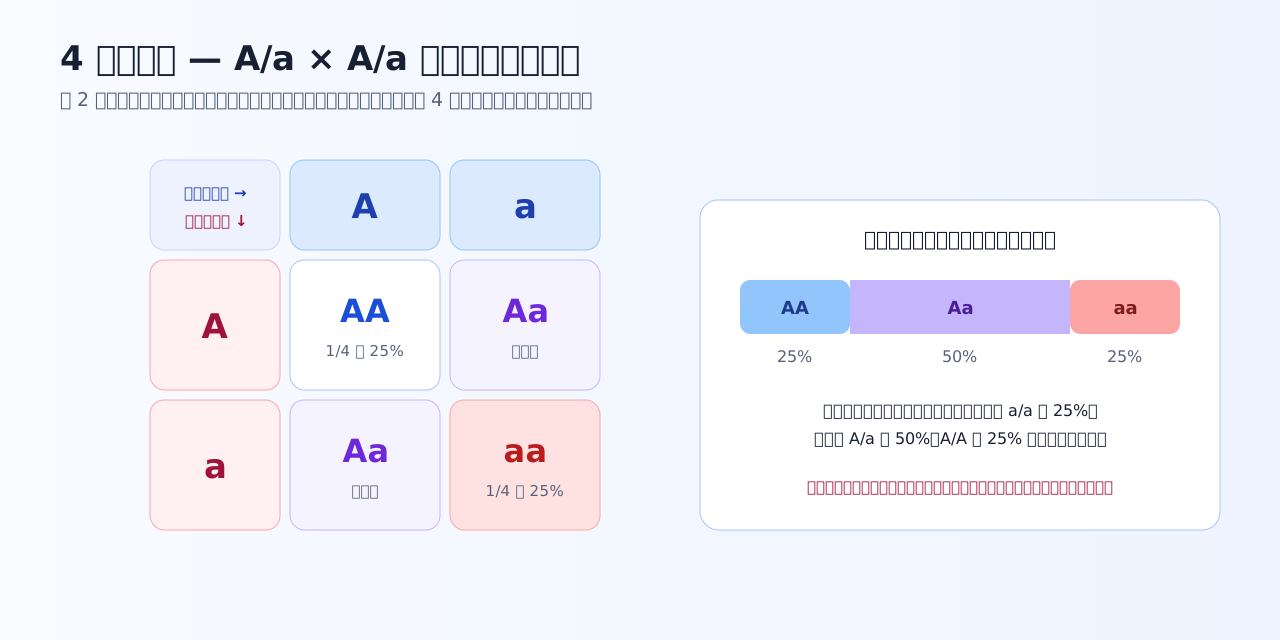
Before the review set, one more look at the Chapter 3 Punnett square — always draw this shape first for single-gene probability questions. (Diagram labels are in Japanese; the layout follows the surrounding text.)
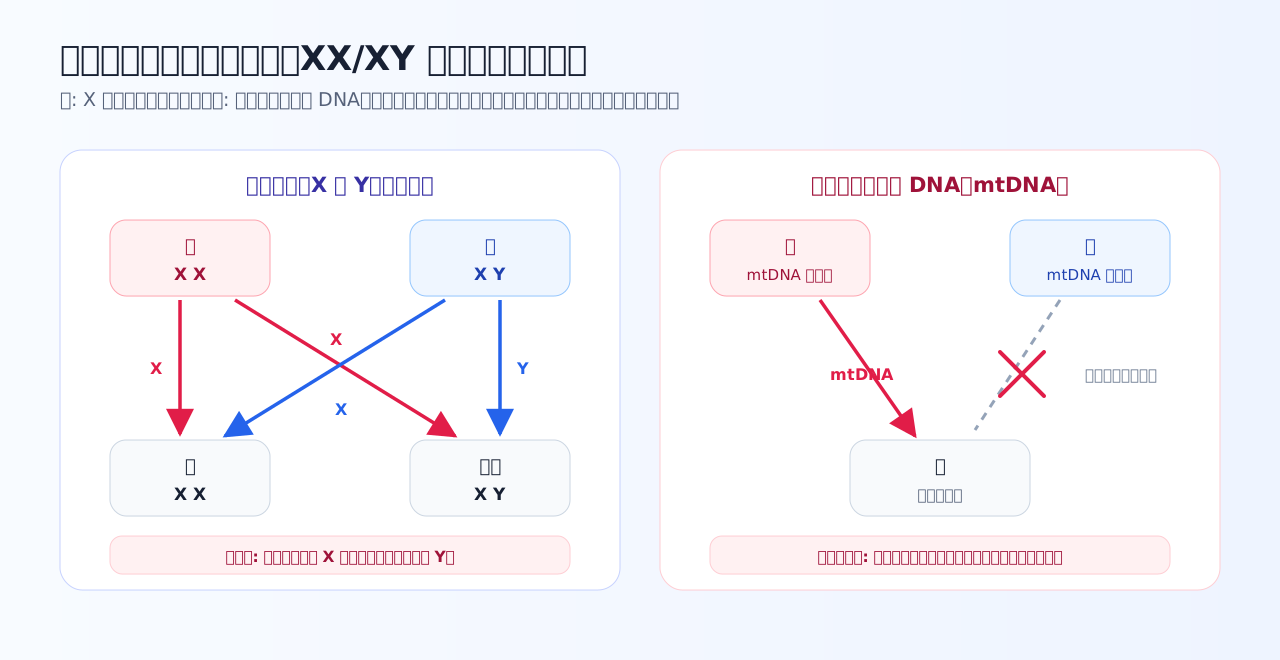
And the Chapter 4 essentials: a father never passes X to a son, and for mtDNA you trace the maternal line first. (Diagram labels are in Japanese; the layout follows the surrounding text.)
Tips for review
When you get a question wrong, identifying what kind of mistake it was — not just the answer — makes improvement easier. For example:
- Did you mix up the units (DNA / gene / chromosome)?
- Did you mix up who passes what to whom (X-linked / mtDNA)?
- Did you mix up probability with certainty (polygenic / VUS / negative)?
Separating mistakes this way makes the same mistake less likely the next time.
Comprehensive review 7-1 — across single-gene and non-Mendelian inheritance
Confirm probabilities and who-passes-what to whom across multiple cases.
Q35. In an introductory autosomal recessive model, both parents are carriers A/a. Two children in a row were unaffected. What is the probability that the third child is a/a, in percent?
With A/a × A/a, a/a is 25% per pregnancy. The outcomes of the first two children do not rewrite the Punnett square for the third.
Q36. In an introductory X-linked recessive model, the mother is a carrier and the father is unaffected. Which group is closest to being the most likely to be affected?
In the textbook XX/XY model, with a carrier mother, sons are the ones most likely to be affected — 50% among sons.
Q37. Which is the closest introductory description of mtDNA?
Mitochondrial DNA is normally passed from the mother to her children, so we trace it along the maternal line.
Q38. A family carries a disease-related variant; some members have no symptoms while others do. Which concept is closest to this description?
If some people carry the same variant but do not show the phenotype, incomplete penetrance is the closest concept.
Comprehensive review 7-2 — finishing with polygenic traits, testing, and family history
Wrap up by checking polygenic traits, VUS, and family history together.
Q39. When looking at a family in which heart disease is common, which is the closest first pass at organizing the picture?
Even when the same disease is common in a family, a single gene, multiple genes, and shared environment such as diet and exercise may all overlap.
Q40. Which is the closest description of finding a VUS on a test?
A VUS is a variant whose interpretation has not been confirmed at this time. Interpret it together with further information.
Q41. In an introductory autosomal recessive model, when the parents are A/a and a/a, what is the probability that a child is a carrier A/a, in percent?
For A/a × a/a, A/a and a/a come out in equal halves, so the carrier A/a probability is 50%.
Q42. Which of the following is not an example of an item to keep in mind when writing a family history note?
Relationship, diagnosis or symptoms, age at diagnosis, maternal / paternal side, and prior test results are core items of a family history note. Favorite TV shows have little bearing at the entry point of counseling or a clinic visit, so they do not fit.
Where this course lands
- You can name DNA, genes, chromosomes, and the genome as distinct things rather than as the same thing.
- You can follow how gametes are made by meiosis and how fertilization restores the chromosome count.
- You can read autosomal dominant / recessive on a Punnett square without breaking the "per-pregnancy" view.
- You can organize X-linked, mitochondrial, chromosome-number changes, and de novo variants as distinct inheritance patterns.
- You can treat polygenic traits, genetic predisposition, penetrance, and variable expressivity as ways of looking at risk rather than as fate.
- You can read a VUS, a negative result, or a family history note together with its meaning and its limits.
What to do next to make it stick
- For a family close to you, write one-line notes — "relationship / diagnosis / age at diagnosis / maternal or paternal side / prior test results" — one line per person.
- When you see phrases like "the risk is N times higher" in news or articles, make it a habit to also look up the underlying absolute risk in percent.
- When you encounter X-linked or mtDNA topics, first write down on paper "who passes what to whom" to confirm it.